Phoenix Artificial Turf Pros
Desert-Adapted Turf Installs in Phoenix, AZ
Desert-adapted turf installs in Phoenix using UV-stabilized fiber and heat-reflective base for extreme sun. Free estimates.
- 15+ Years local experience
- 500+ Projects completed
- Licensed & Insured
Serving Phoenix and nearby communities.
Turf that fades in a year, or runs too hot to walk on barefoot, usually got installed with the wrong fiber for the climate. Desert-Adapted Turf Installs is a system chosen specifically for Phoenix's Sonoran Desert sun, not generic turf trucked in from a cooler region. Phoenix Artificial Turf Pros picks fiber, base depth, and color tone based on actual surface temperature performance, not a catalog default.
This isn't a premium upsell. It's matching the product to the climate it's going to sit in for the next decade. A lot of the complaints we hear about artificial grass in Phoenix, melted-looking blades, scorched feet in July, color that washes out by the second summer, trace back to turf that was never engineered for triple-digit surface temps in the first place.
What's included
What's Included
Typically included: Optional: Customer prep:
- Heat-rated fiber selection based on sun exposure
- Reflective base backing to reduce surface temperature
- Base depth adjusted for monsoon drainage
- Lighter-toned turf for full-sun areas
- Extra infill for added cooling effect
- Identify which parts of the yard get full afternoon sun
- Clear the installation area before the crew arrives
Want a clearer scope?
Get a Free EstimateDesert-Adapted Turf Installs
How It's Installed
- Heat tolerance planning — Turf products are selected based on resistance to high heat and intense sun exposure.
- Soil moisture testing — Existing soil conditions are tested to plan appropriate drainage solutions.
- Reflective base prep — Base materials are chosen to reduce heat retention beneath the turf surface.
- Heat-resistant turf laying — Specialized desert turf fibers are installed to withstand extreme temperatures.
- Expansion gap allowance — Small gaps are built into seams to accommodate material expansion in heat.
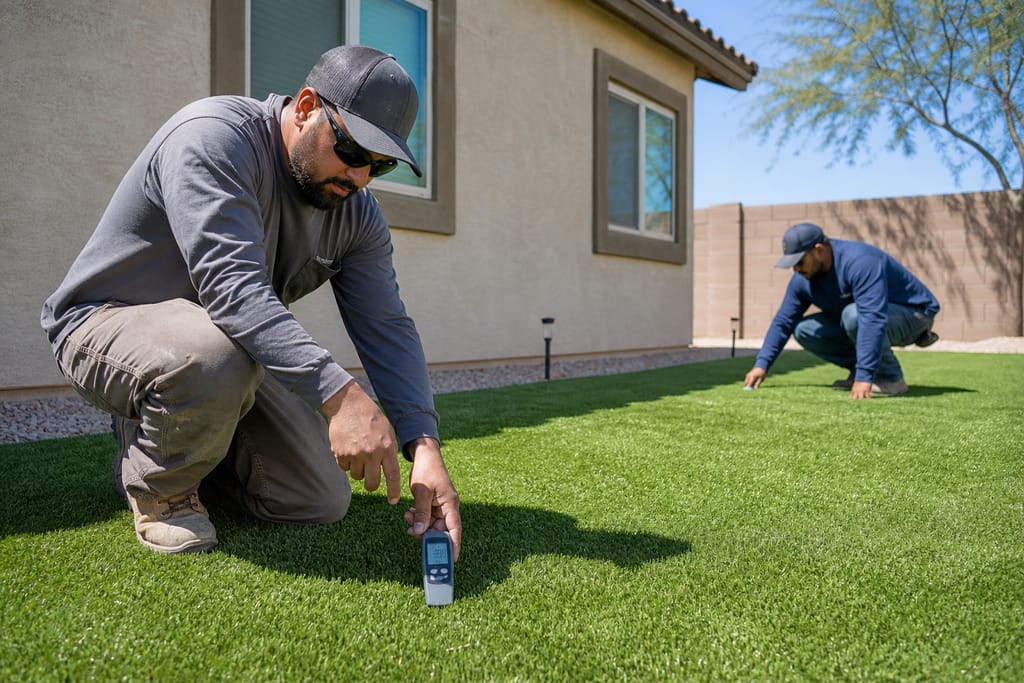
- Surface cooling check — The finished surface is tested for temperature performance under direct sun.
Questions about this?
Get a Free EstimateMaterials
Materials Used
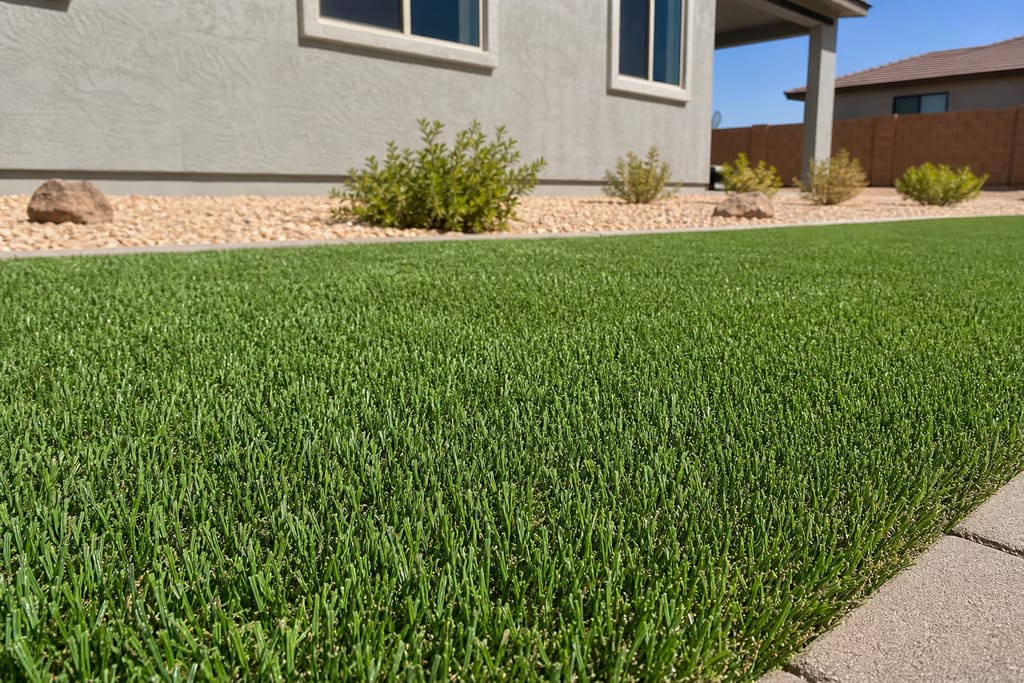
Heat-resistant turf fibers
Fibers engineered to resist melting and fading under intense desert sun exposure.
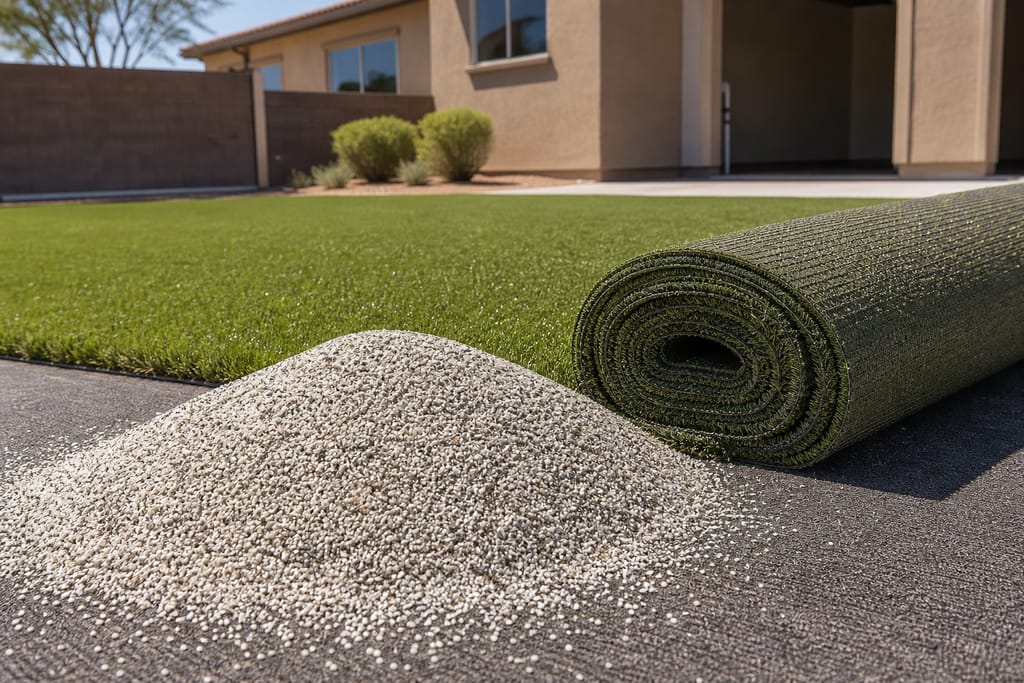
Reflective infill blend
Infill designed to reflect heat and reduce surface temperature buildup during peak summer months.
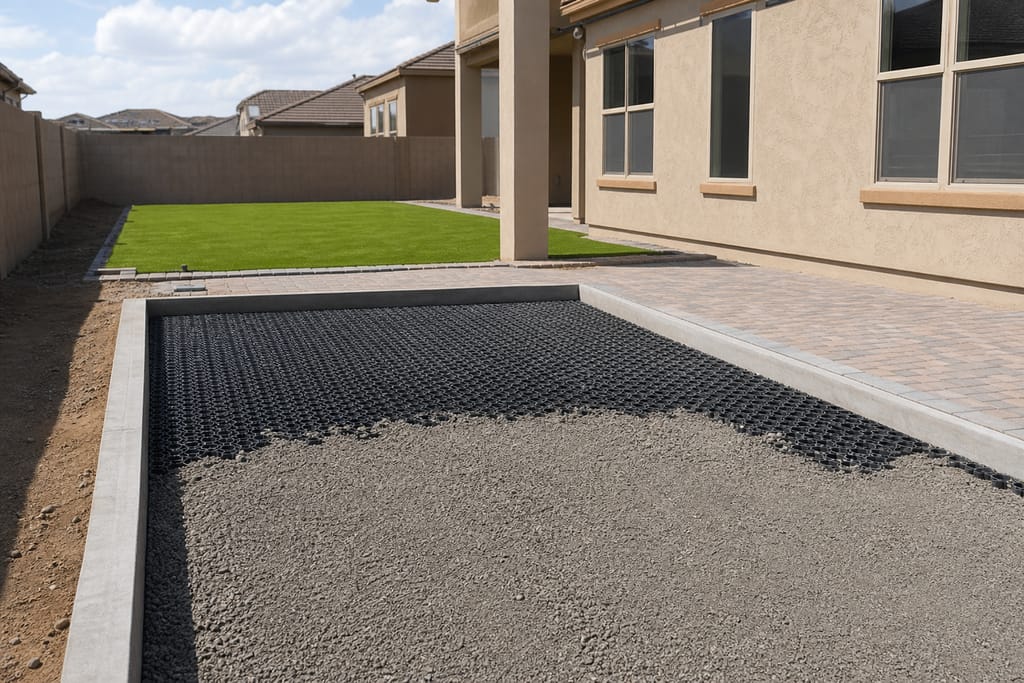
Drought-tolerant base layer
Base materials selected for stability in dry, low-moisture soil conditions typical across Phoenix.
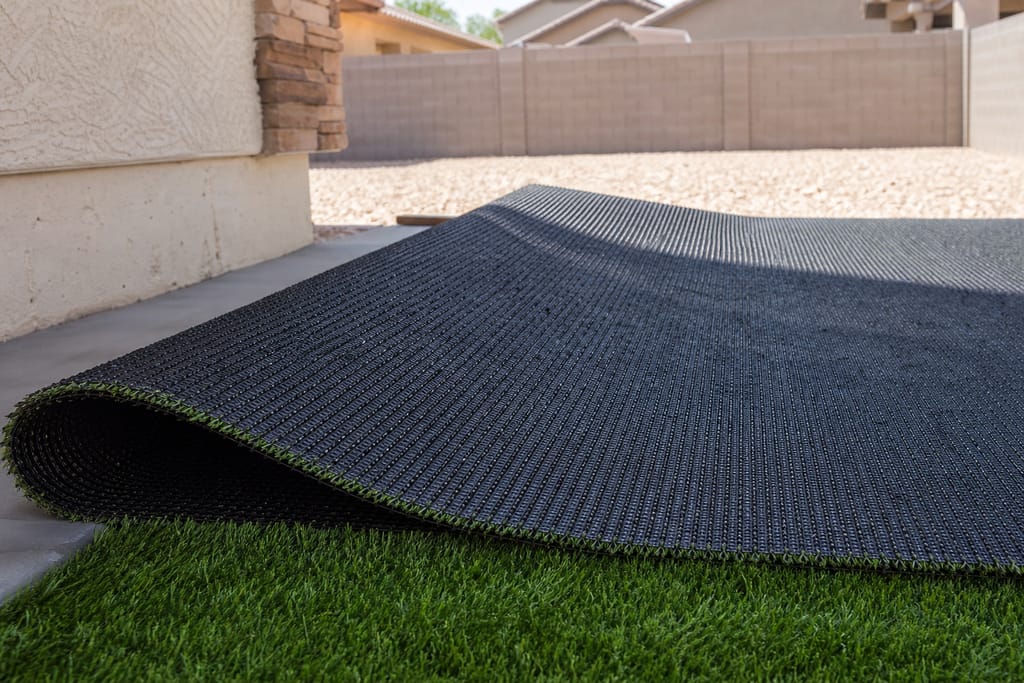
UV-protected backing
Backing treated with UV stabilizers to prevent cracking in high heat.
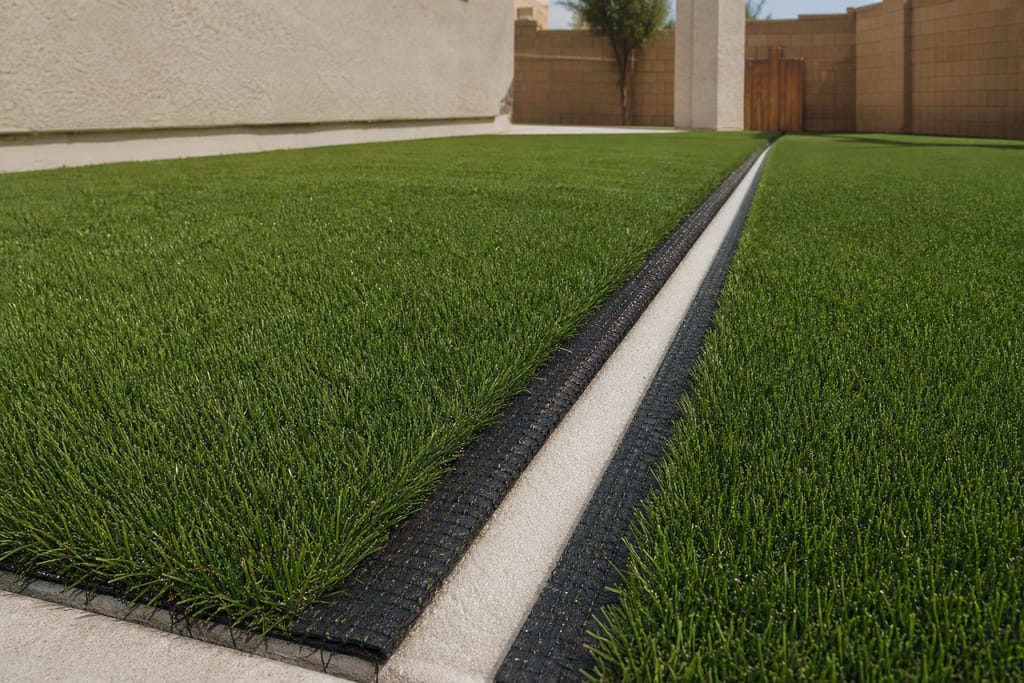
Thermal break seams
Seaming technique designed to handle material expansion from heat cycling.
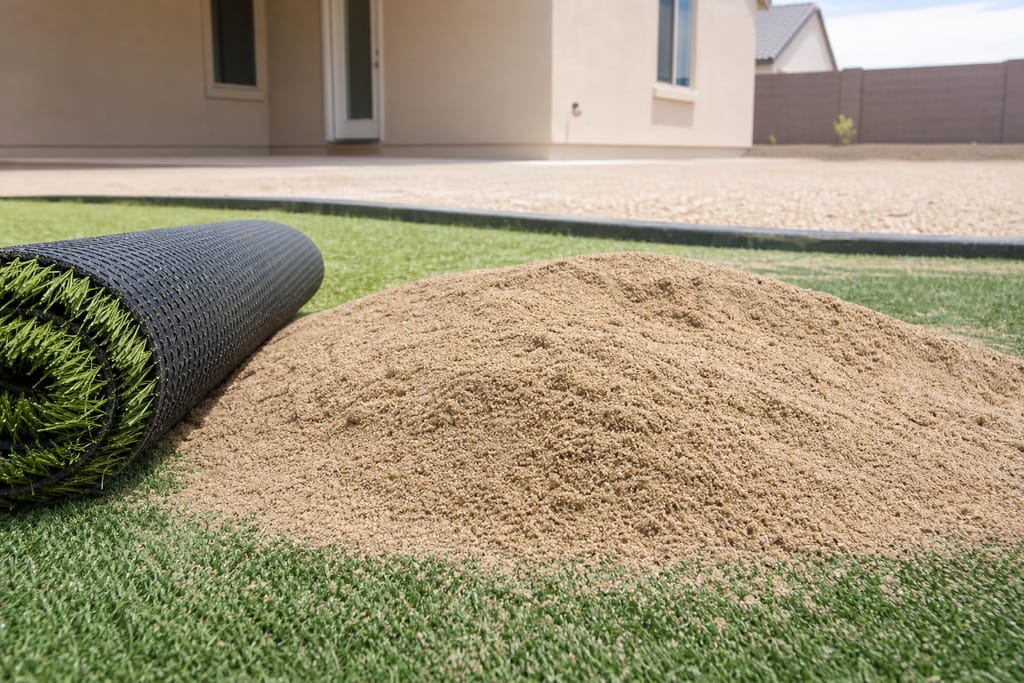
Sand-based filler
Sand filler provides stability while allowing heat dissipation.
Questions on materials?
Get a Free EstimateTimeline
How Long Does a Desert-Adapted Turf Install Take?
A typical project moves fast once the fiber and base decisions are locked in, most of the planning work happens before the crew ever shows up with equipment.
- 01
Site and soil evaluation
same day - 02
Base and reflective prep
1 day - 03
Turf lay with thermal-break seams
1–2 days - 04
Cooling performance check
same day
Need a schedule that fits?
Get a Free EstimateCodes & permits
Permits
Confirm with your city before any drainage-related work begins. Permit requirements can shift depending on lot grading and existing drainage easements, so a quick call to the city saves a headache later.
| Typically needs a permit | Often no permit |
|---|---|
| Projects involving major drainage rework for monsoon runoff | Standard desert-adapted turf installs with no grading changes |
Need help with permits?
Get a Free EstimateDIY vs pro
DIY vs Pro
| DIY | Hire a pro |
|---|---|
| Possible for a small, shaded patch | Fiber choice matched to actual sun exposure on your lot |
| Easy to pick the wrong fiber type without heat-performance data | Reflective base and thermal-break seaming applied correctly |
| No way to test surface temperature before full install | Cooling performance checked before the job is done |
Not sure DIY vs pro?
Get a Free EstimateWhen to call
When to Call
Call before the next install, not after. If you're replacing turf that's already failed once under Phoenix sun, that's a strong signal the first install used the wrong product for the exposure, and a free estimate can confirm what should go in its place.
- Existing turf is too hot to walk on barefoot by midday
- Color has faded noticeably within a year or two
- You're installing new turf in a full-sun yard with no shade cover
Seeing warning signs?
Get a Free EstimateFAQs
Desert-Adapted Turf FAQs
What is the best artificial grass for hot climates like Phoenix?
UV-stabilized polyethylene blends with reflective backing perform best here. They resist fading and run noticeably cooler underfoot than standard fiber grades built for milder climates, which matters once surface temps climb past what bare feet or pets can comfortably handle.
Does desert-adapted turf cost more than standard turf?
It typically runs a bit higher per square foot since the fiber and backing are built to a tighter heat spec, but it holds color and shape longer under direct Phoenix sun, which usually evens out the cost over the life of the lawn.
Will this turf still get hot in summer?
It will still absorb heat like any synthetic surface in direct sun, but the reflective backing and fiber choice bring surface temps down compared to standard-grade turf, which is the difference between warm and genuinely too hot to touch.
Can desert-adapted turf go in a full-sun yard with no shade?
That's exactly the scenario this system is built for. Fiber color, base reflectivity, and seam spacing all get adjusted specifically for full, unshaded sun exposure.
How it works
Our process
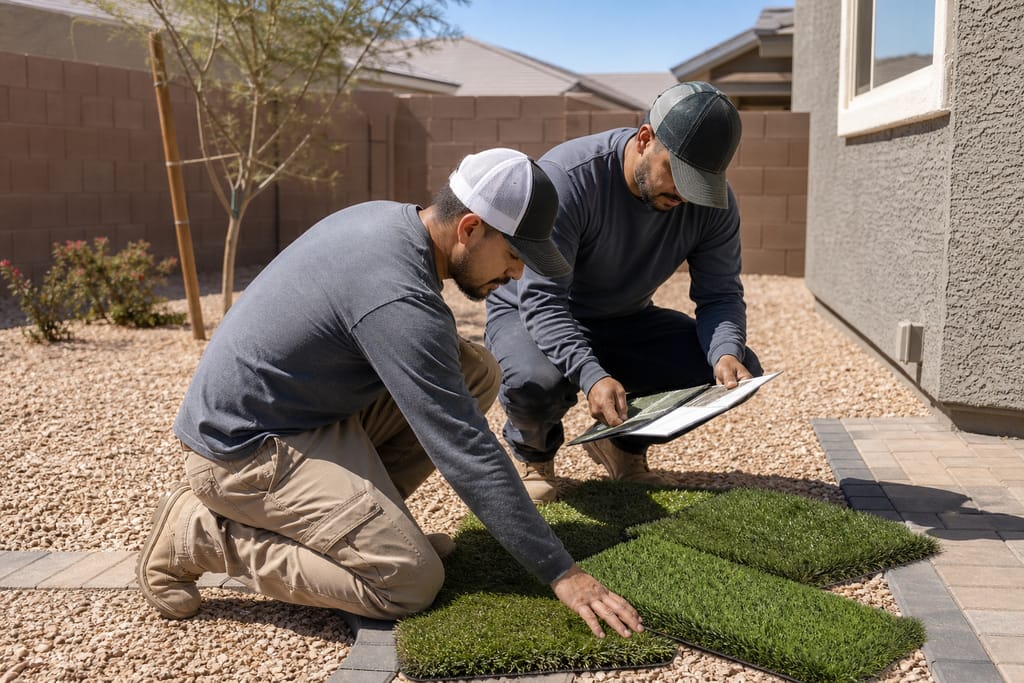 Step 1
Heat tolerance planning
Turf products are selected based on resistance to high heat and intense sun exposure.
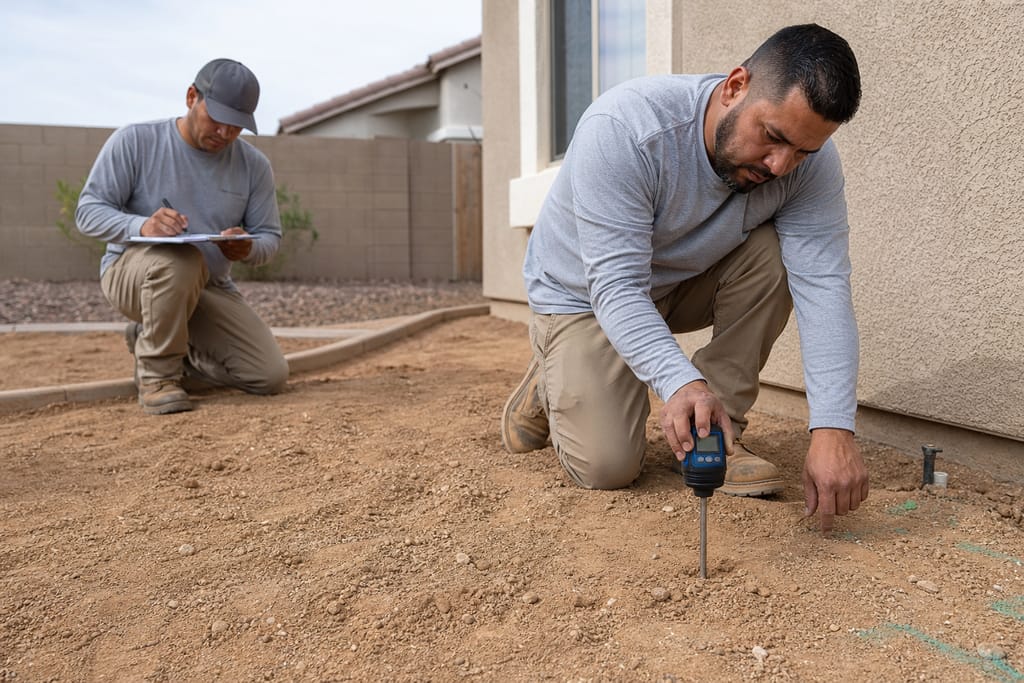 Step 2
Soil moisture testing
Existing soil conditions are tested to plan appropriate drainage solutions.
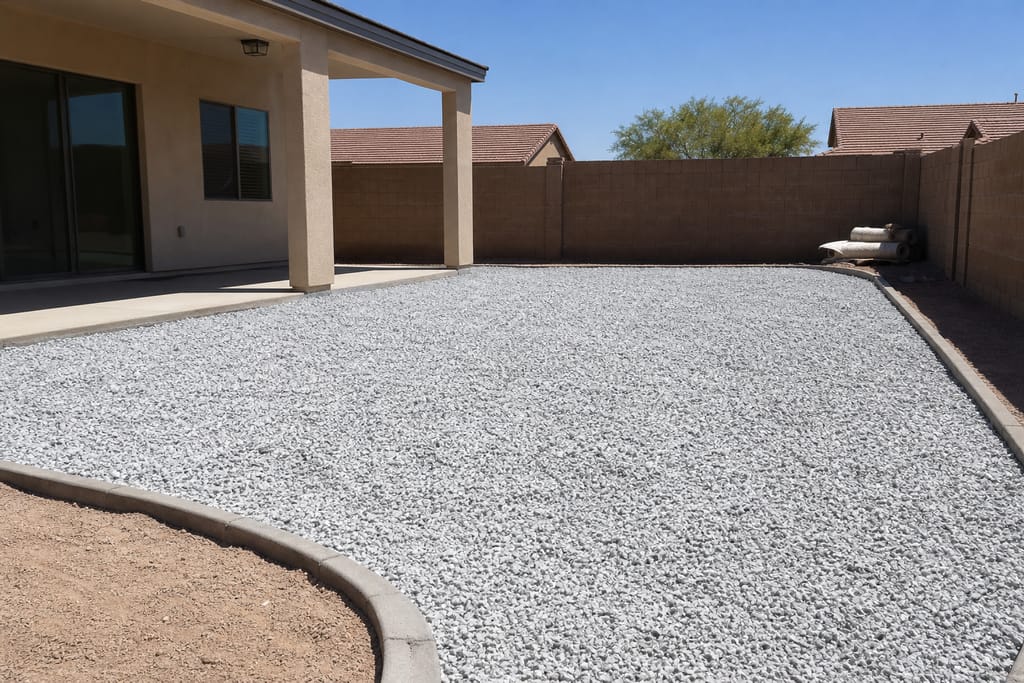 Step 3
Reflective base prep
Base materials are chosen to reduce heat retention beneath the turf surface.
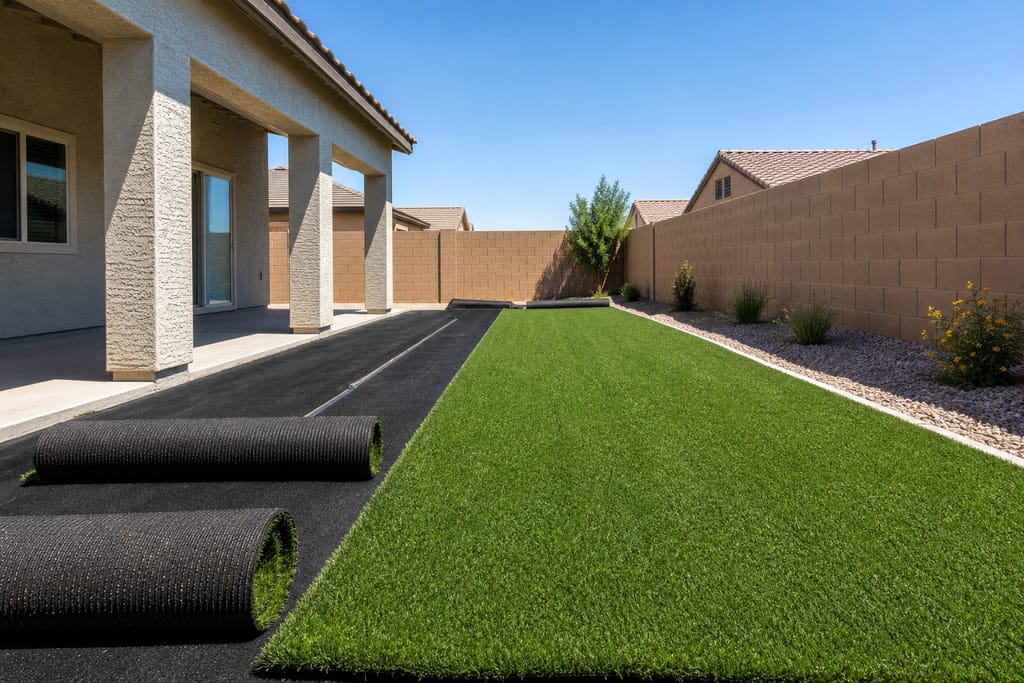 Step 4
Heat-resistant turf laying
Specialized desert turf fibers are installed to withstand extreme temperatures.
 Step 5
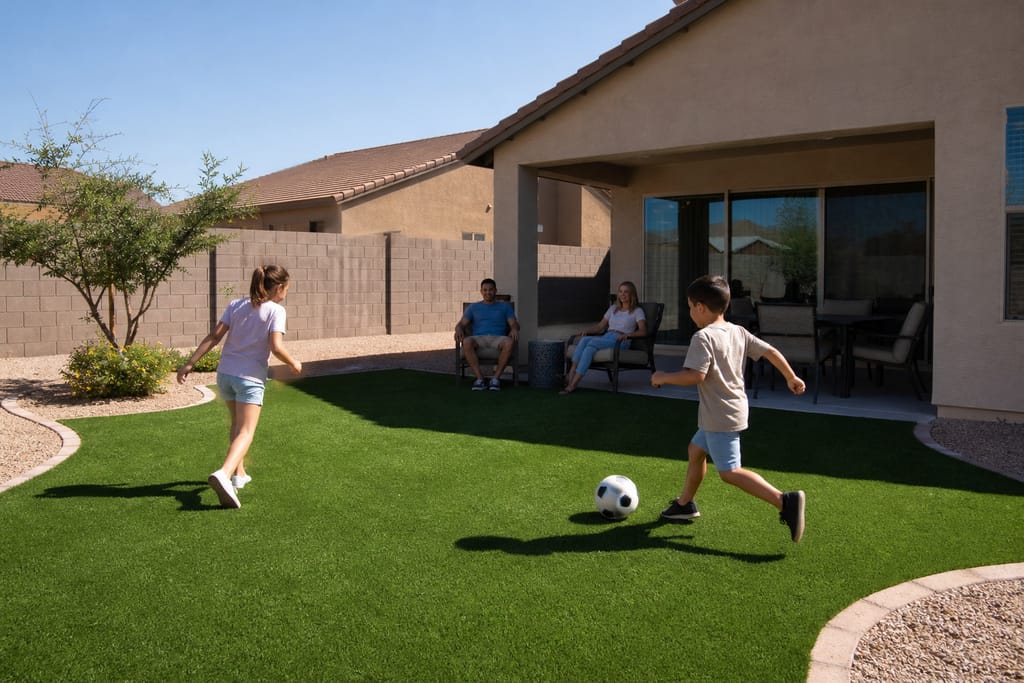
Expansion gap allowance
Small gaps are built into seams to accommodate material expansion in heat.
 Step 6
Surface cooling check
The finished surface is tested for temperature performance under direct sun.
More services
Other Artificial Turf services
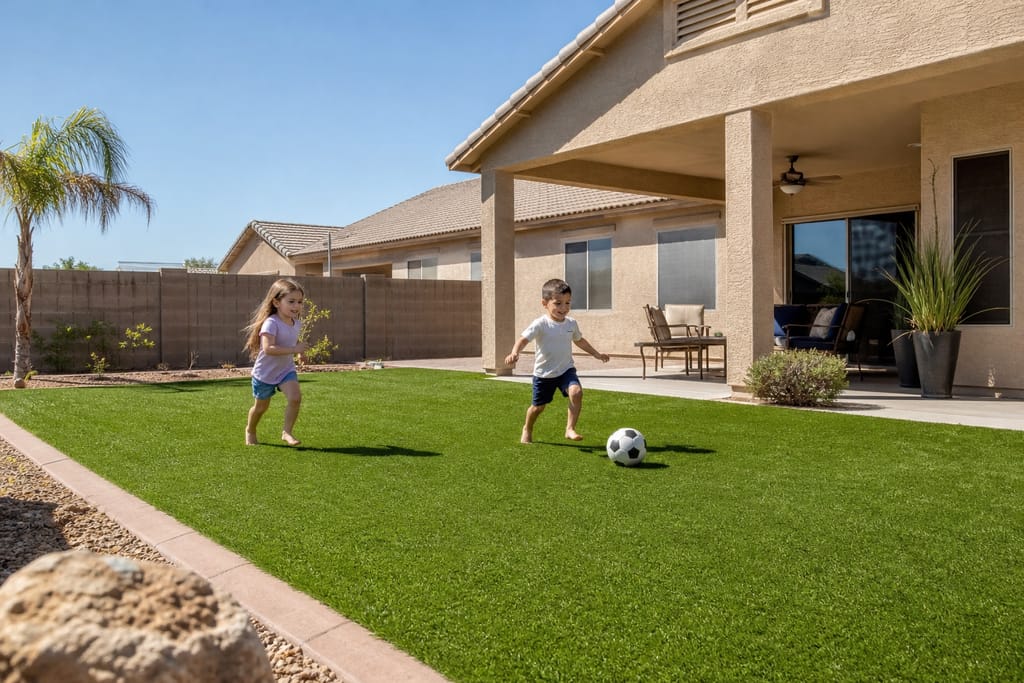
Artificial Turf Installation
Artificial turf installation in Phoenix with heat-rated fiber, compacted base, and seamed finish. Free estimates.
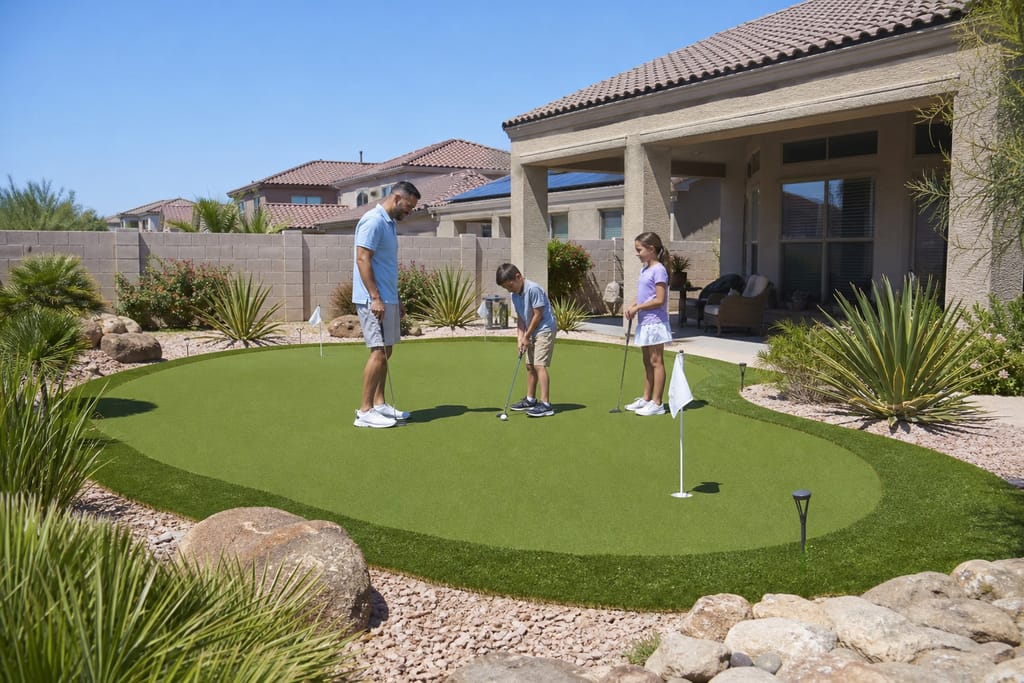
Putting Green Installation
Backyard putting green installation in Phoenix with contour shaping, cup placement, and heat-rated turf. Free estimates.
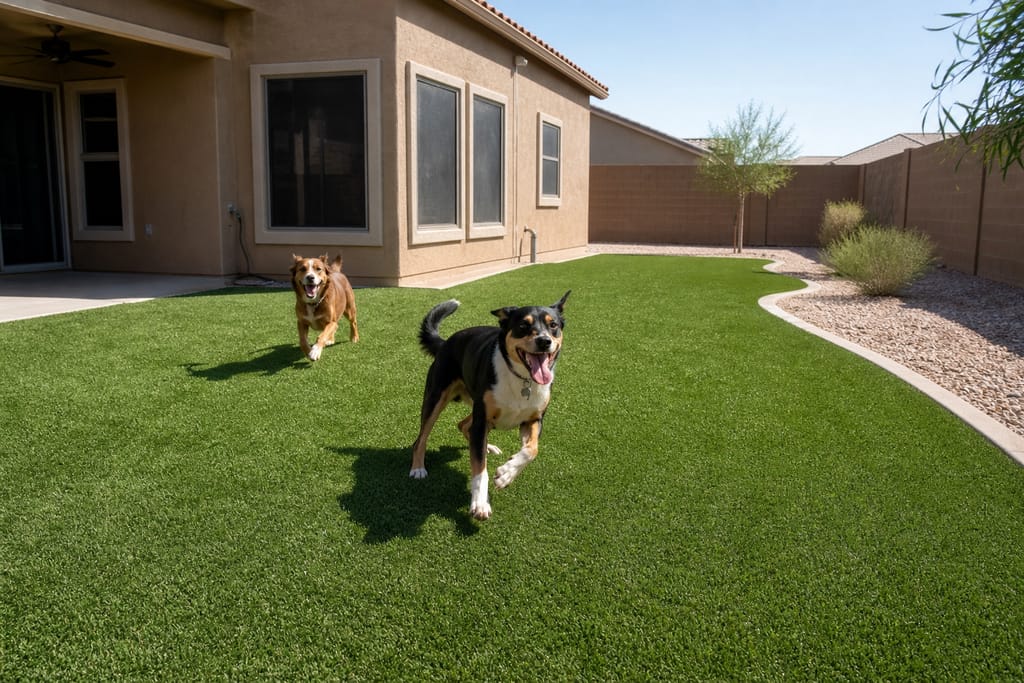
Pet Turf Installation
Pet turf installation in Phoenix with antimicrobial infill and fast drainage backing for odor control. Free estimates.
Ask about Desert-Adapted Turf Installs
Tell us about the project and how to reach you.