Phoenix Artificial Turf Pros
Desert Climate Turf Conversion in Phoenix, AZ
Desert climate turf conversion in Phoenix replacing dead lawns with drought-tolerant turf and capped irrigation. Free estimates.
- 15+ Years local experience
- 500+ Projects completed
- Licensed & Insured
Serving Phoenix and nearby communities.
Why does grass keep dying every summer no matter how much you water it? Phoenix's older canal-fed neighborhoods were built around irrigated lawns, and as water rates climb, that setup stops making financial sense. Desert Climate Turf Conversion replaces the failing lawn entirely instead of asking you to keep reseeding it.
Phoenix Artificial Turf Pros handles the removal, soil work, and irrigation capping so the yard stops needing water altogether, not just less of it.
What's included
What's Included
Typically included: - Optional: Customer prep:
- Removal of dead grass and root material — Soil amendment and debris clearing -.
- Capping or rerouting of old irrigation lines — Drought-resistant base and turf install.
- Combined xeriscape zones alongside turf areas
- Upgraded infill for longer-term durability
- Locate your irrigation shutoff valve ahead of time
- Note any sprinkler heads you want preserved for planting beds
Want a clearer scope?
Get a Free EstimateDesert Climate Turf Conversion (Dead-Lawn Replacement)
How the Conversion Works
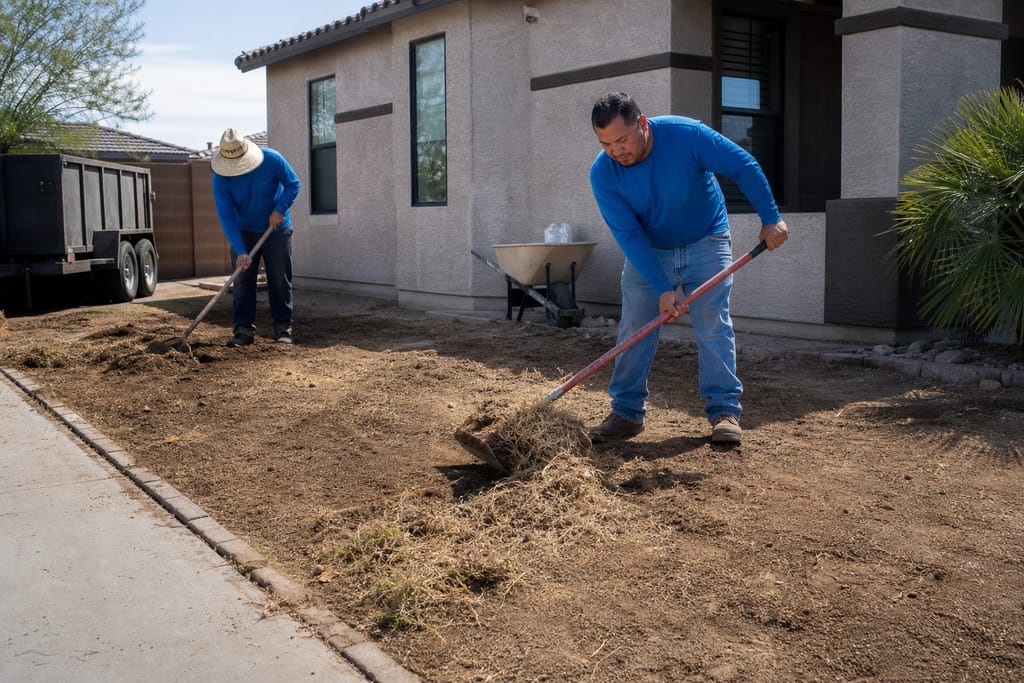
- Dead lawn removal — Existing dead grass and roots are stripped away to prepare a clean base.
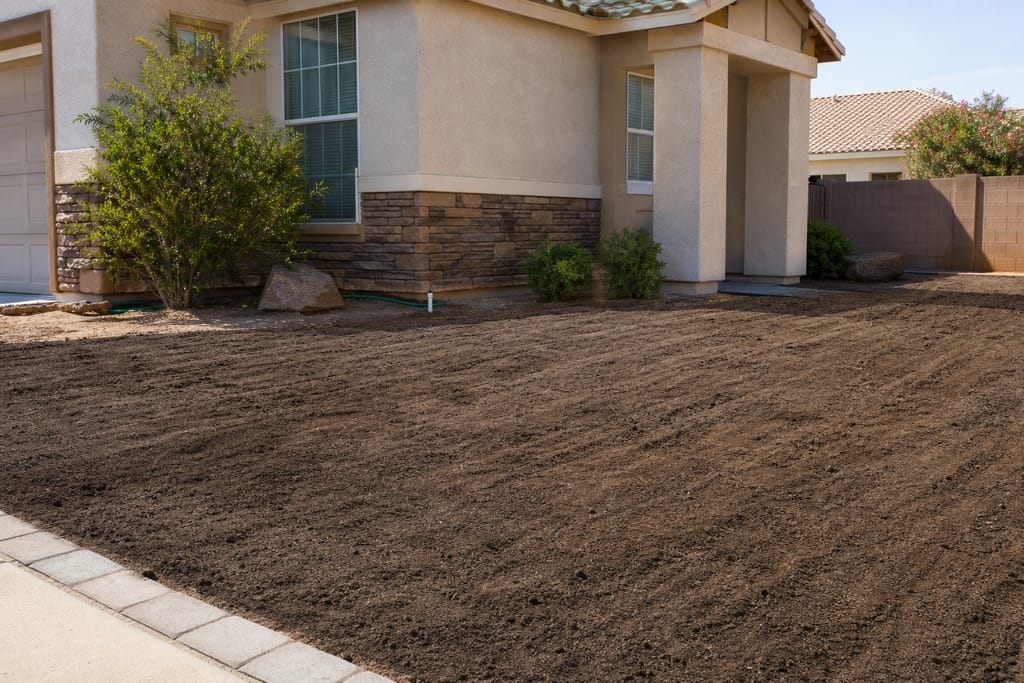
- Soil amendment — Soil is treated to remove debris and stabilize the surface for turf installation.
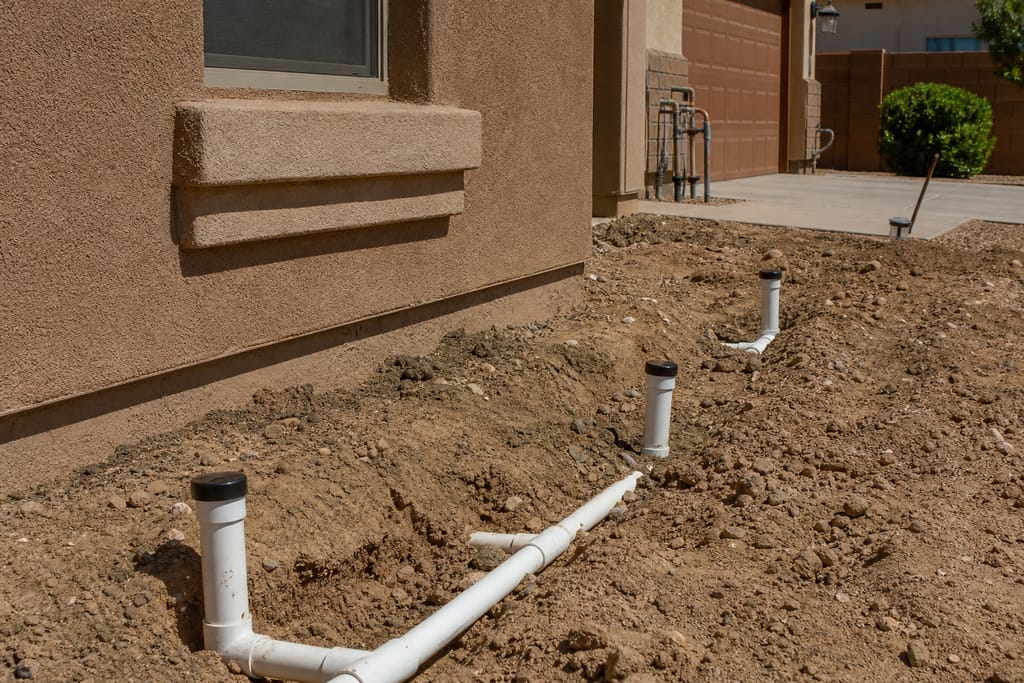
- Irrigation capping — Old sprinkler lines are capped or rerouted to prevent water waste under turf.
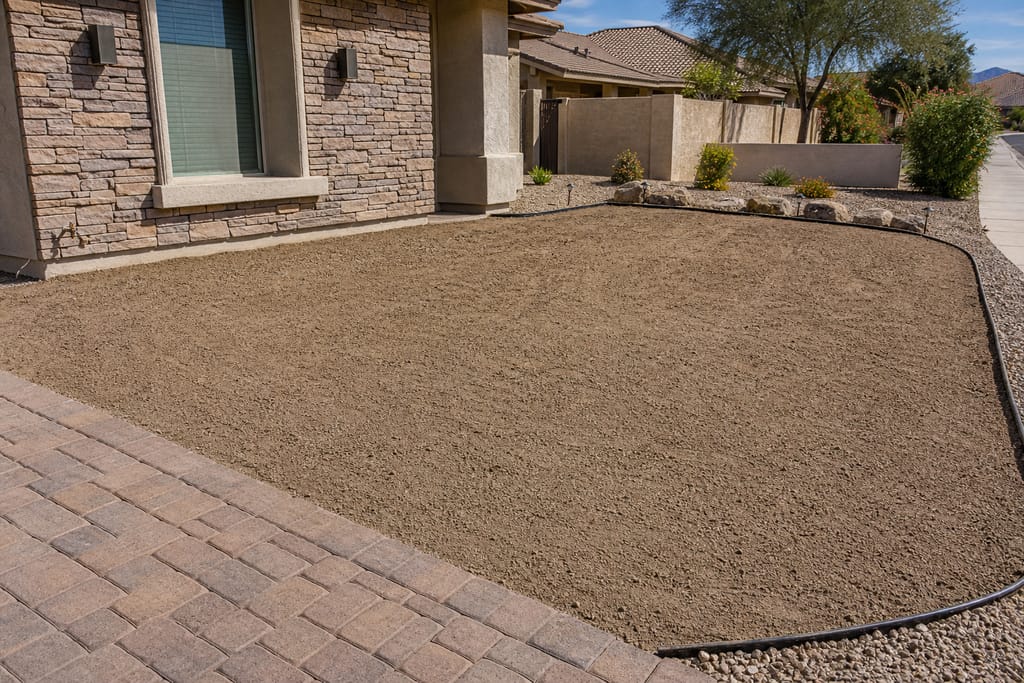
- Water-wise base layer — A drought-resistant base is installed to support long-term turf stability.
- Turf conversion installation — New turf is laid over the converted area, replacing the previous lawn entirely.
- Water savings review — Homeowners are shown estimated water savings from the completed conversion.
Questions about this?
Get a Free EstimateMaterials
Materials Used
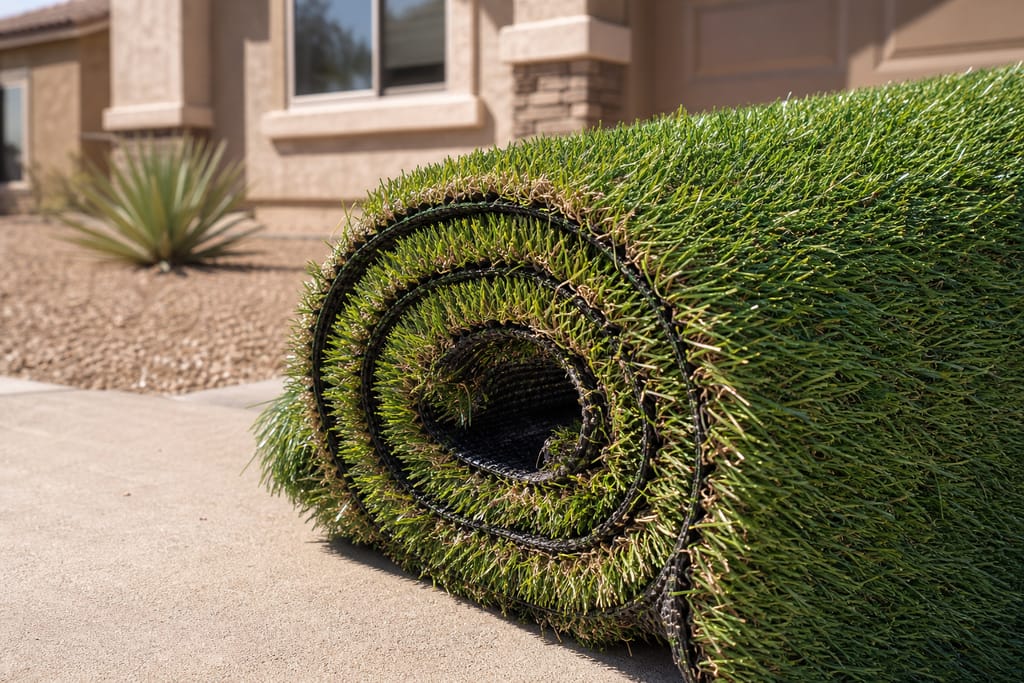
Drought-tolerant turf fibers
Fibers selected for resilience in arid, low-water climates common across older Phoenix neighborhoods.
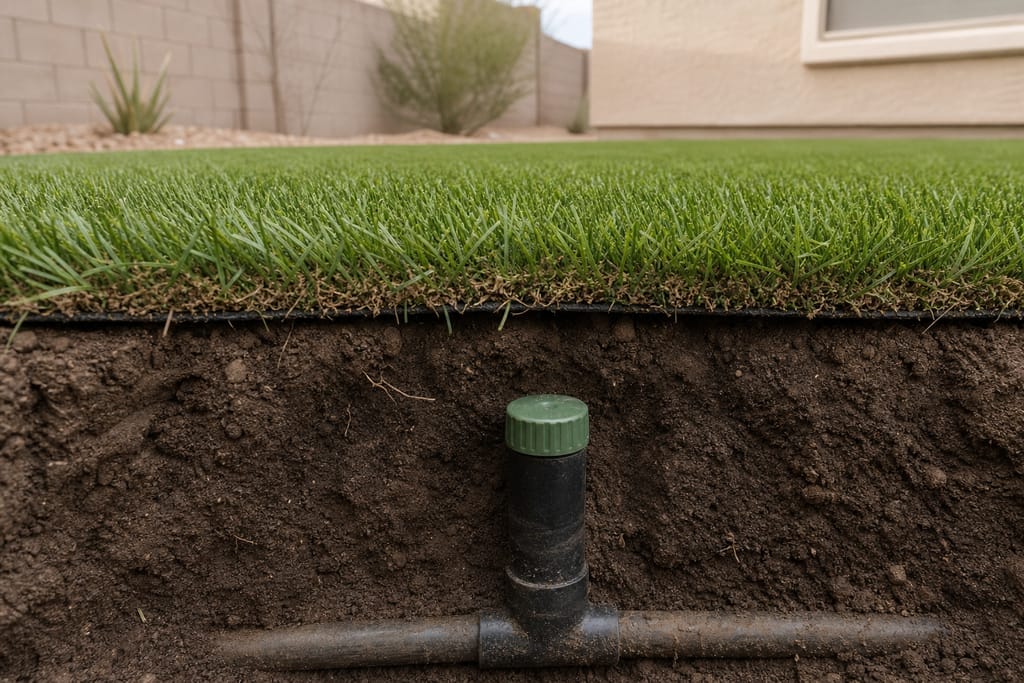
Capped irrigation fittings
Fittings seal off unused sprinkler lines beneath the new turf.
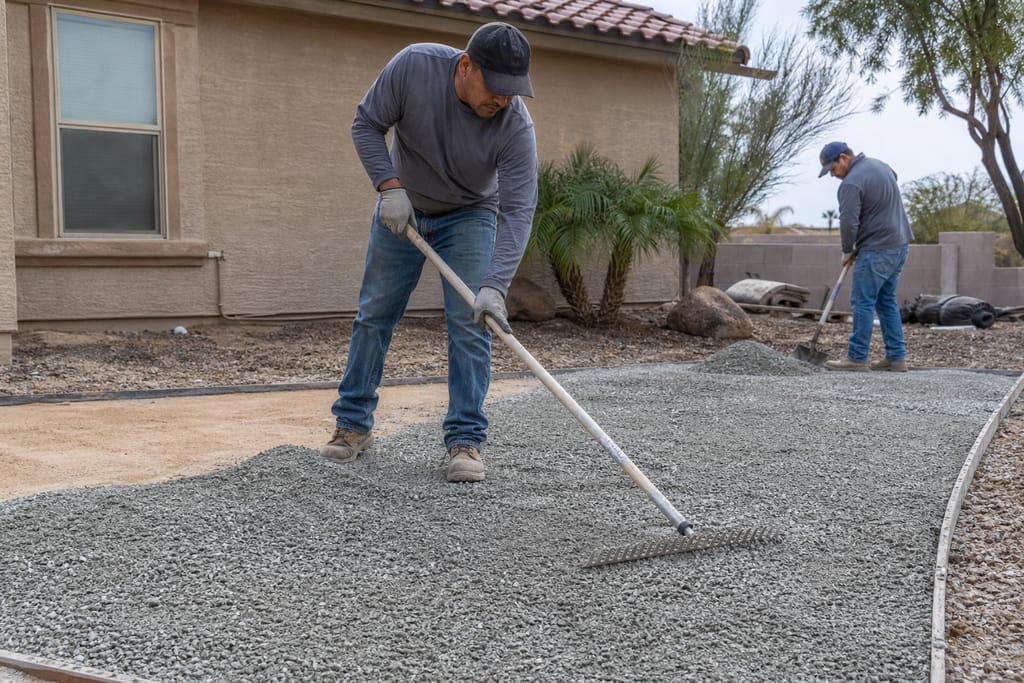
Recycled base aggregate
Eco-friendly base material reduces environmental impact of conversion projects.
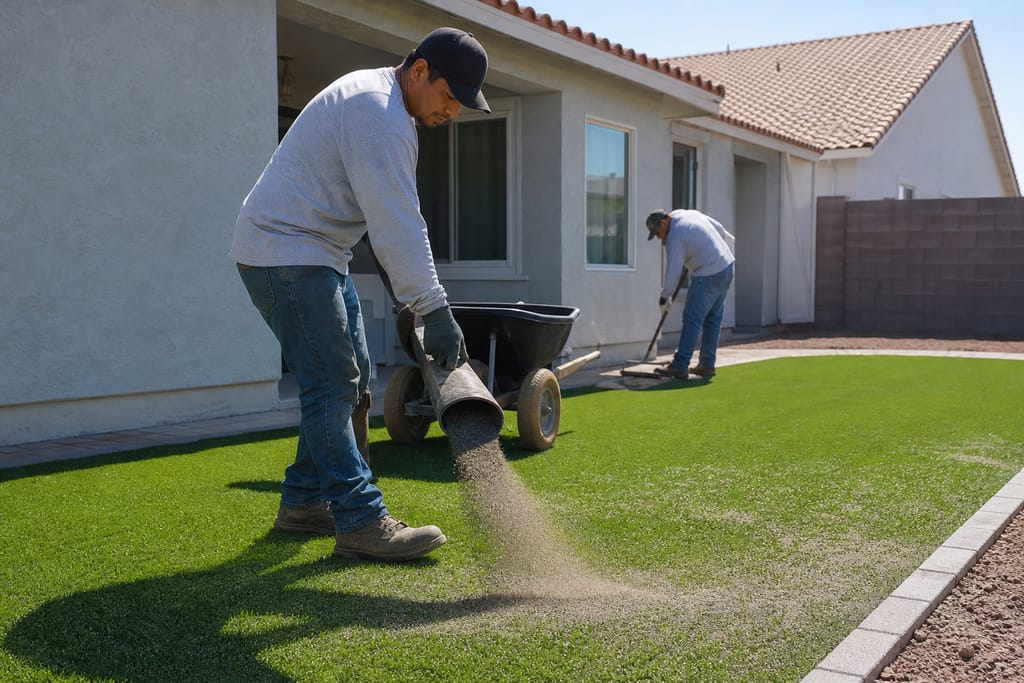
Low-water infill
Infill chosen to minimize maintenance needs in dry climates.
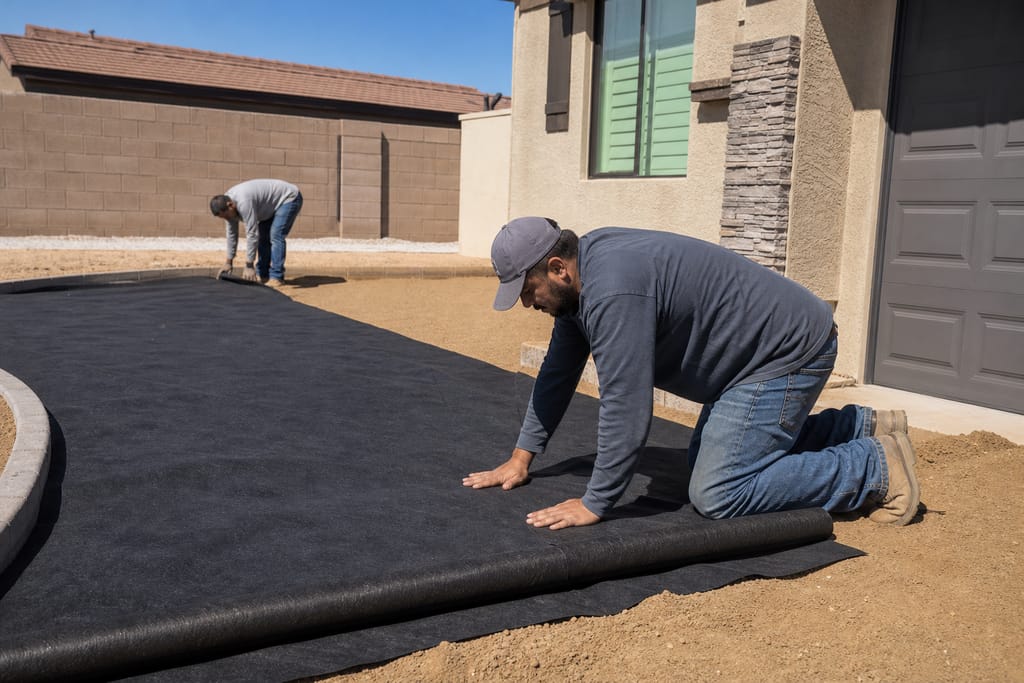
Erosion control fabric
Fabric layer helps stabilize soil during the lawn conversion process.
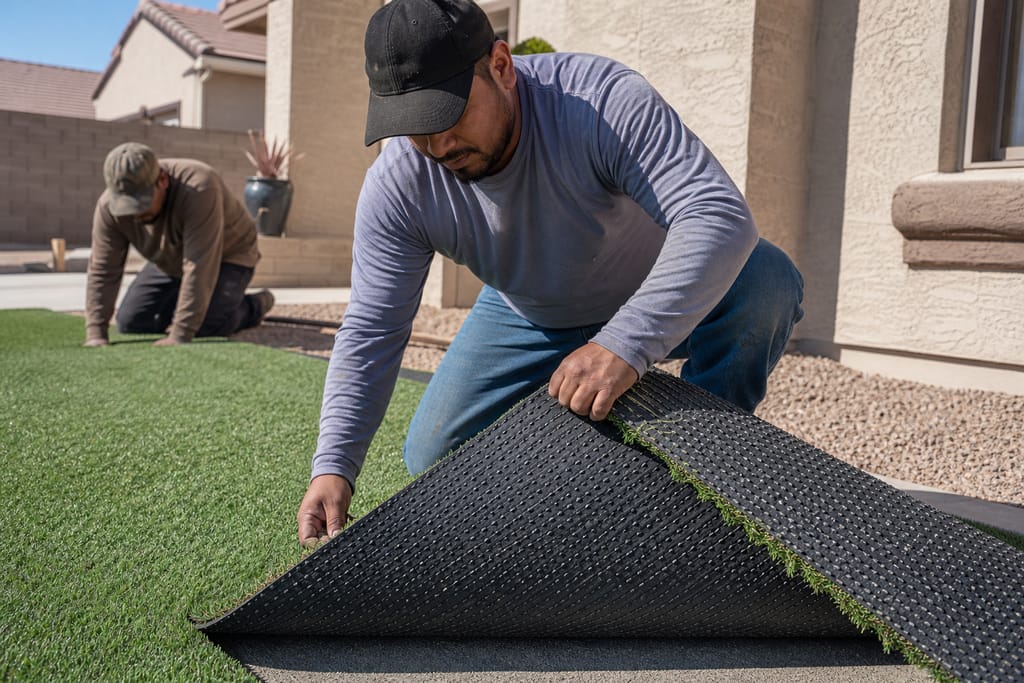
Sun-stable turf backing
Backing material resists degradation from prolonged sun exposure.
Questions on materials?
Get a Free EstimateCost
Cost and Water Savings
Removal difficulty and square footage drive most of the pricing here. Cutting lawn irrigation typically reduces the water portion of a monthly utility bill noticeably, actual savings depend on your current watering schedule. Request a free estimate for project-specific numbers.
| Project type | Typical range | What’s included |
|---|---|---|
| Small front yard conversion | $9–$12 | per sq ft, dead grass removal and standard turf. |
| Mid-size yard conversion | $12–$15 | per sq ft, irrigation capping and drought-tolerant base. |
| Full-property conversion | $15–$19 | per sq ft, both front and back yard with combined xeriscape zones. |
These are typical local ballparks — final cost depends on scope, materials, and site conditions. A free estimate gives you an accurate, itemized number for your home.
Want a number for your home?
Get a Free EstimateTimeline
How Long Does a Turf Conversion Take?
- 01
Site walkthrough
same day - 02
Dead grass removal and grading
1 day - 03
Irrigation capping and base install
1 day - 04
Turf lay and infill
1 day
Need a schedule that fits?
Get a Free EstimateCodes & permits
Permits
- Projects where irrigation lines are capped or rerouted in ways that affect city water connections
Need help with permits?
Get a Free EstimateDIY vs pro
DIY vs Pro
| DIY | Hire a pro |
|---|---|
| Workable for very small, flat lawn sections | Proper grading prevents drainage problems after install |
| Grading mistakes after sod removal cause pooling later | Irrigation lines capped correctly and tested |
| Irrigation capping done wrong can leak underground | Base matched to long-term turf stability |
Not sure DIY vs pro?
Get a Free EstimateWhen to call
When to Call
- Brown patches that keep returning despite reseeding
- Water bills climbing from constant irrigation
- You've given up trying to keep the lawn alive
Seeing warning signs?
Get a Free EstimateFAQs
Dead Lawn Replacement FAQs
Does artificial turf save money on water bills in Phoenix?
Cutting lawn irrigation typically lowers the water portion of your bill, the exact amount depends on your current watering habits.
How can I grow grass in Arizona without it dying every summer?
Natural grass struggles against Phoenix's extended heat regardless of watering schedule, which is why many homeowners convert to turf instead of fighting it every year.
What happens to my old irrigation system?
Lines get capped or rerouted so they don't leak or waste water under the new turf.
How much does dead lawn conversion cost?
Most projects run $9 to $19 per square foot depending on size and irrigation work needed.
Can I keep some plants and add turf around them?
Combined turf and planting bed layouts are common, especially paired with xeriscape zones.
Next step
Get a Free Estimate
Call Phoenix Artificial Turf Pros to stop reseeding and start saving water. Home · Contact · Xeriscape + Turf Combo Design
How it works
Our process
 Step 1
Dead lawn removal
Existing dead grass and roots are stripped away to prepare a clean base.
 Step 2
Soil amendment
Soil is treated to remove debris and stabilize the surface for turf installation.
 Step 3
Irrigation capping
Old sprinkler lines are capped or rerouted to prevent water waste under turf.
 Step 4
Water-wise base layer
A drought-resistant base is installed to support long-term turf stability.
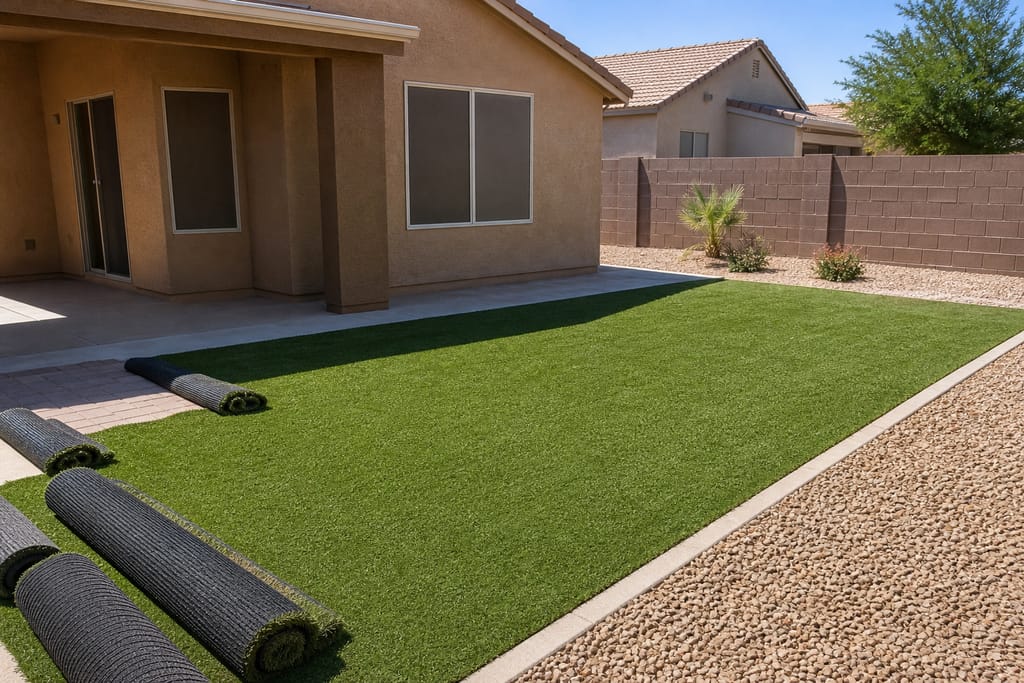 Step 5
Turf conversion installation
New turf is laid over the converted area, replacing the previous lawn entirely.
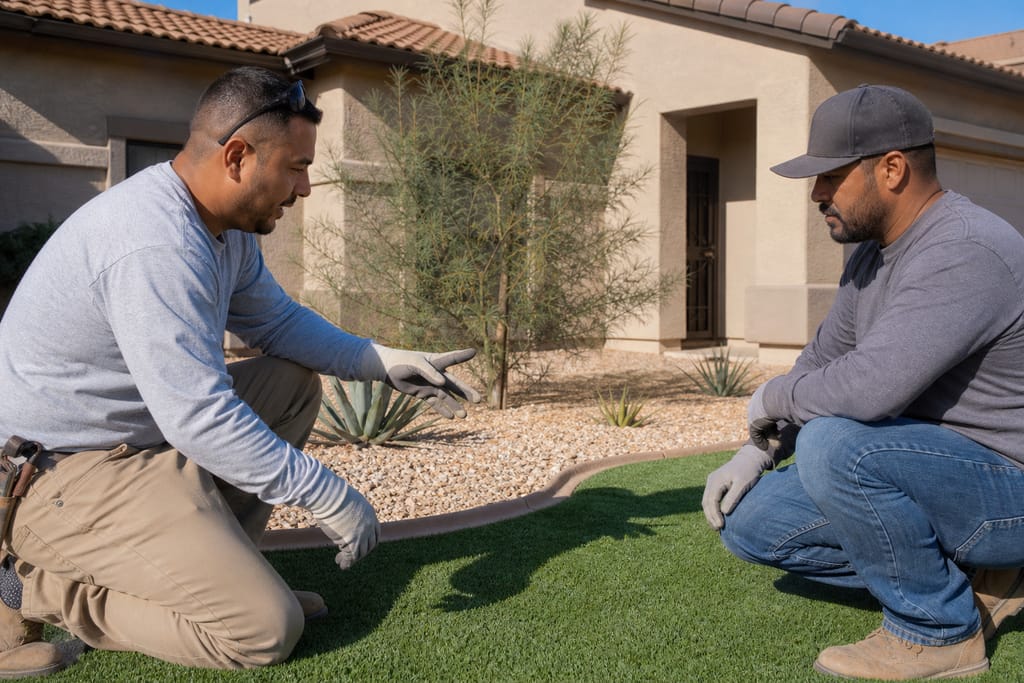 Step 6
Water savings review
Homeowners are shown estimated water savings from the completed conversion.
More services
Other Artificial Turf services
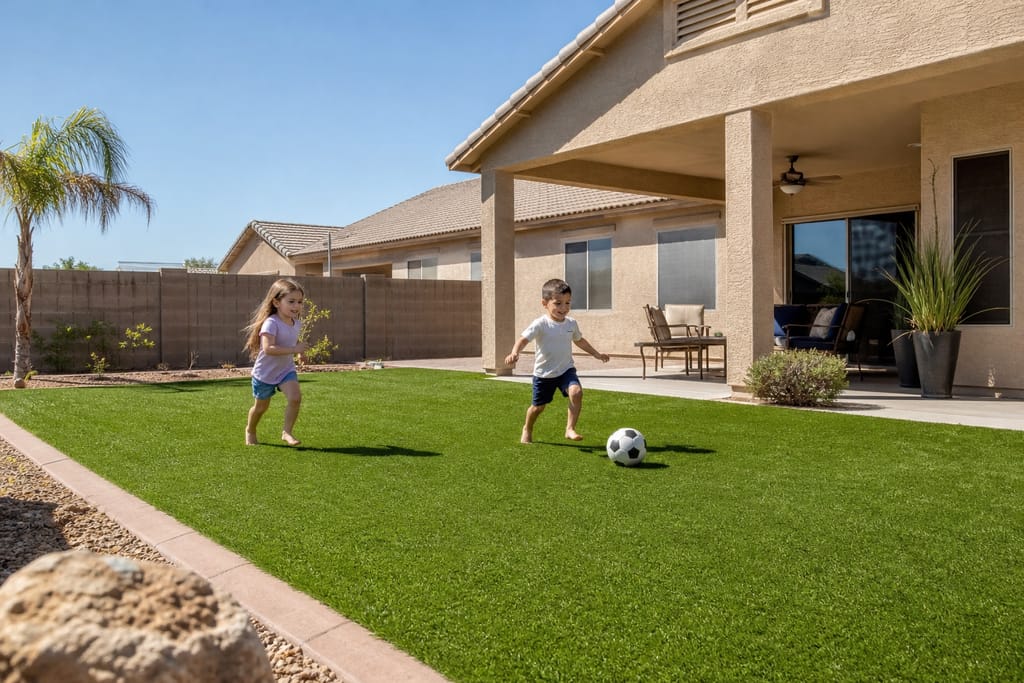
Artificial Turf Installation
Artificial turf installation in Phoenix with heat-rated fiber, compacted base, and seamed finish. Free estimates.
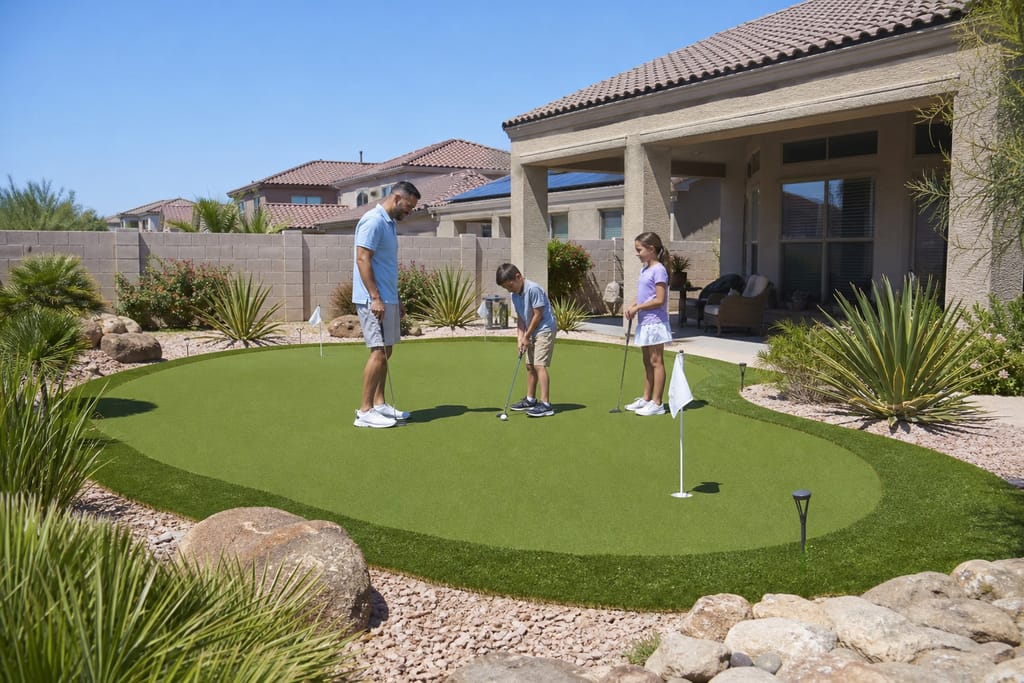
Putting Green Installation
Backyard putting green installation in Phoenix with contour shaping, cup placement, and heat-rated turf. Free estimates.
Pet Turf Installation
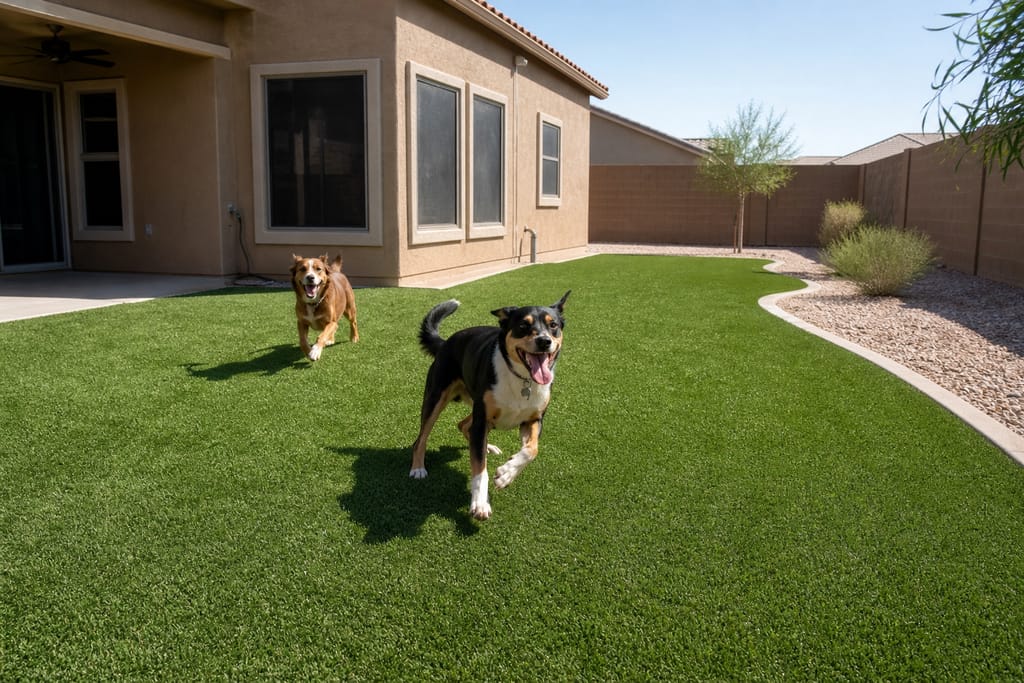
Pet turf installation in Phoenix with antimicrobial infill and fast drainage backing for odor control. Free estimates.
Ask about Desert Climate Turf Conversion (Dead-Lawn Replacement)
Tell us about the project and how to reach you.